Introduction
Not long ago I spent a weekend in a small university town with my cousin, who lives in a communal house with friends who are artists and activists. The house is characterized by wood floors and walls, colorful carpets, hip posters, musical instruments and organic food. You can imagine my surprise, then, when I was in the kitchen having a glass of water and noticed a hot pink lunch bag sitting on a nearby counter. Upon further inspection, I discovered that it was a Disney “Tinker Bell and Fairies” lunch bag (see image below), and its front displayed an image of four attractive women – or were they girls? I soon came to the alarming realization that these characters were indeed supposed to be girls, but they had unusually womanish features and were arranged in sexually inviting yet childishly innocent poses. Irritated, I thought: “Why are we exposing girls to such awful images, and what is this lunch bag doing in a hippy house?”
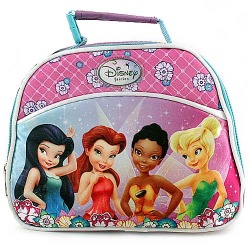
(The culprit: A typical accessory marketed by Disney to young girls.) | <><>
I decided to investigate the story of this lunch bag a little further, and I discovered that there is a whole range of paraphernalia containing images of Tinker Bell and her fairy friends that can be purchased online, including fairy costumes, toys, home décor products, collectibles and accessories. I then did a Google image search of Tinker Bell and fairies, and it generated an assortment of images that confirmed my suspicion that this stuff is far from innocent. Two words quickly came to mind: child pornography.
I will not indulge in a full critical analysis of this image – the presence of the male gaze, the (only somewhat) subtle racism, and the downright pornographization of children – but the point of this story is merely to highlight that this stuff is everywhere. Even in the places where we least expect to find it.
